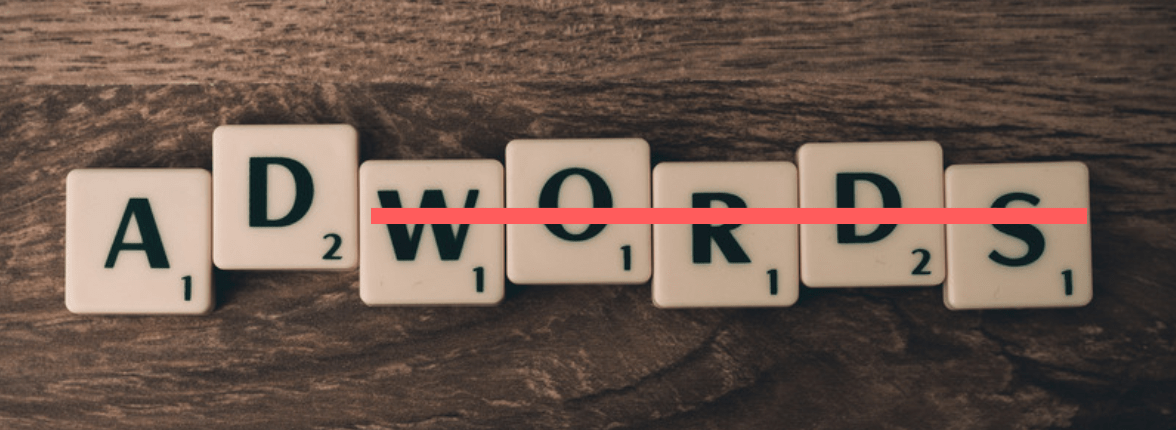
You’ve probably seen the email from Google by now. The AdWords name is no more, time to welcome Google Ads. It looks like myself, along with a number of others in the industry are going to need to update website service offering pages pretty soon.
Google will be hanging up two of it’s most recognized brand names in its recent rebrand. AdWords will now simply be called Google Ads, DoubleClick for advertisers & Google Analytics 360 will now be under the Google Marketing Platform brand. Finally, DoubleClick for publishers & DoubleClick Ad Exchange will now be called Google Ad Manager.
Along with the changes to AdWords & Analytics 360, Google will also be rolling out Display & Video 360 within the Google Marketing Platform. This’ll consolidate DoubleClick Bid Manager, Campaign Manager, Studio, and Google Audience Center 360. The solution will help provide a hub for agency, creative, and media teams to work on campaigns together.
Ok, so you read most of this in the email from Google. While many of these changes are superficial, Google’s rolling out one pretty cool change you should know about.
Smart Campaigns
I advise a number of businesses on AdWords. Whether sharing tips and tricks or completely managing campaigns, I’m in AdWords pretty often. Usually, when I’m doing research for an industry I like to take a look at ads running for keywords I’m looking to bid on. As of late, I’ve noticed a number of ads for companies with no website. The AdWords ad simply goes to a landing page.
It seems Google’s noticed this too, hence the creation of Smart Campaigns. The new default campaign for Google Ads is now created with small businesses in mind. Google’s really made this process simpler by allowing users to focus on specific goals. This is seemingly a step up from AdWords Express, automating the entire process from creative to targeting. Google has also hinted at tools to assist companies with little to no web presence.
What’s Next
As the month goes on you’ll begin to see the rollout of these new changes, as well as additional campaign types & updates. Expect to learn a few new things during the Google Marketing Live event on July 10.
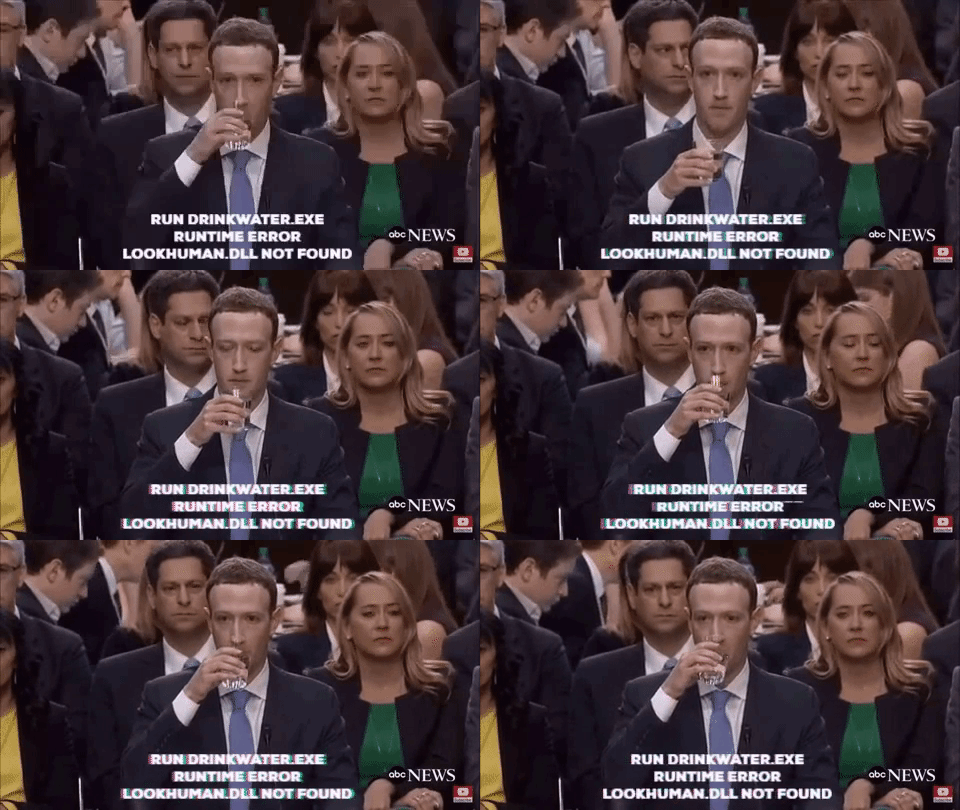 Mark Zuckerberg was able to outmaneuver Congress last week. He gave a decent performance and I think we all need to admit why. Mark’s a robot. If you watched any of his testimony you know it’s true. Zuck’s a machine capable of carrying out a complex series of actions automatically, and while we may try, humans can’t match a robot in discipline, speed, and endurance. The Facebook team (the army of $1,500 an hour communications consultants) observed these flaws and effectively beat Congress.
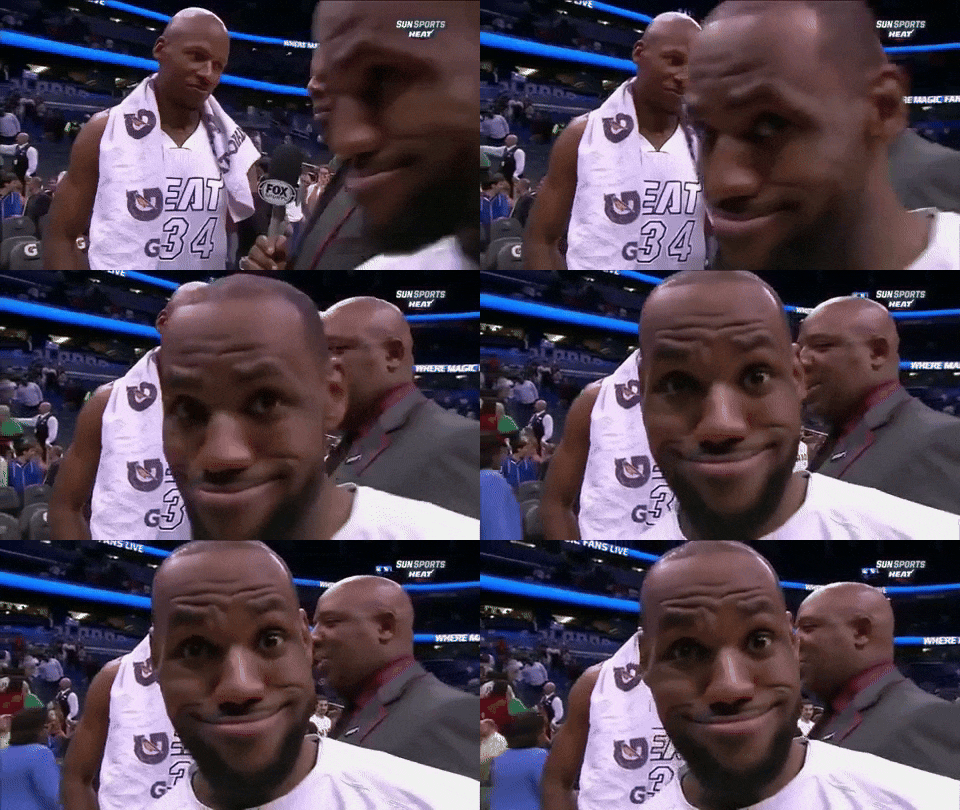 First things first, you’re going to need to have specific buyer personas. If you’re selling custom-made basketball shoes to Lebron James and the starting five for the Cavaliers congratulations, you’ve struck marketing gold, your persona and audience are one. The only problem is that this very rarely happens. Take the multifamily housing industry. You may be targeting an apartment manager and c-suite executive, but if you use the same messaging for both you’ll miss key pain points. You need to have personas that reflect the different segments of your audience.
 Grant H. Williams